




Finding religious apparel that blends faith, comfort, and style can feel challenging for many American Christian women. As more than 60 percent of American adults identify Christianity as their faith, the meaning behind what you wear goes well beyond fashion. Thoughtful clothing choices allow you to express your beliefs confidently, whether attending church or simply enjoying a casual day out. Explore how faith-based garments can celebrate spiritual identity while staying true to modern style and everyday comfort.
Table of Contents
- Defining Religious Apparel and Its Purpose
- Key Types and Distinctions in Religious Clothing
- Symbolic Meaning and Modern Fashion Trends
- Legal Protections for Religious Apparel in America
- Navigating Religious Apparel in Workplaces and Public Spaces
- What to Avoid When Choosing Religious Apparel
Key Takeaways
| Point | Details |
|---|---|
| Religious Apparel as Expression | Religious clothing represents spiritual beliefs and cultural identity, serving as a connection to faith communities. |
| Symbolism and Diverse Practices | Different faith traditions utilize unique garments that carry deep meanings, transcending mere fashion. |
| Legal Protections | U.S. laws protect individuals expressing their faith through religious attire in workplaces and public spaces. |
| Respectful Selection | Choosing religious apparel should involve understanding its cultural significance, avoiding superficial interpretations. |
Defining Religious Apparel and Its Purpose
Religious apparel represents more than just clothing - it is a powerful form of spiritual expression and cultural identity. Religious clothing transcends simple fabric and design, serving as a tangible representation of faith that connects individuals to their spiritual traditions and community. These garments communicate deep personal beliefs, values, and commitment to religious principles.
At its core, religious apparel functions through multiple interconnected dimensions. Symbolic representation stands paramount, with specific clothing items signaling religious affiliation, status, and devotion. A Christian cross necklace, a Jewish kippah, or a Muslim hijab are not merely accessories but profound statements of faith. Religious garments often codify important spiritual principles like modesty, humility, and cultural heritage, reflecting centuries of theological and cultural development.
The purpose of religious apparel extends far beyond aesthetic considerations. These garments serve practical and spiritual functions simultaneously - identifying community membership, expressing personal religious commitment, and maintaining traditional practices. Whether it’s a Catholic priest’s vestments, a Sikh turban, or a Mormon temple garment, each piece carries significant meaning that connects the wearer to their faith’s broader narrative and collective identity.
Pro tip: When selecting religious apparel, consider not just style but the deeper spiritual significance each piece represents in your personal faith journey.
Key Types and Distinctions in Religious Clothing
Religious clothing represents a rich and diverse landscape of spiritual expression, with each tradition offering unique garments that communicate profound cultural and theological meanings. North American religious attire showcases remarkable diversity, ranging from the Amish plain dress to Sikh turbans and Mormon sacred garments, highlighting the intricate ways faith communities define their identity through clothing.
Christian religious dress, in particular, demonstrates significant variations across denominations and cultural contexts. Christian clothing styles span from simple modest attire to elaborate clerical vestments, each carrying deep symbolic significance about spiritual status and theological interpretation. These garments are not merely aesthetic choices but powerful statements of faith, reflecting theological principles of modesty, reverence, and spiritual commitment.

Beyond Christianity, religious clothing serves multifaceted purposes across different faith traditions. Hasidic Jewish men wear distinctive black hats and suits, Sikh men don turbans as a symbol of spiritual dignity, and Muslim women may choose hijabs or other head coverings as expressions of religious devotion. These clothing choices represent complex negotiations between personal faith, cultural heritage, and individual identity, transcending simple fashion statements.
Pro tip: When exploring religious apparel, approach each garment with respect, understanding that these are deeply personal expressions of spiritual connection and cultural tradition.
Here’s a look at how different religious garments highlight identity across major faith traditions:
| Faith Tradition | Key Garment | Main Symbolism | Typical Context |
|---|---|---|---|
| Christianity | Cross necklace | Redemption, salvation | Worship, daily life |
| Judaism | Kippah | Reverence, humility | Prayer, public spaces |
| Islam | Hijab | Modesty, piety | Public, religious events |
| Sikhism | Turban | Equality, honor | Daily life, ceremonies |
| Mormonism | Temple garment | Sacred promises | Under daily clothing |
| Catholicism | Vestments | Sacrifice, service | Religious ceremonies |
Symbolic Meaning and Modern Fashion Trends
Religious symbols in clothing have emerged as powerful expressions of faith that simultaneously honor tradition and engage with contemporary aesthetic sensibilities. Religious symbols in apparel serve as dynamic markers of identity, blending spiritual significance with modern design trends, creating a nuanced dialogue between personal belief and cultural expression.
Fashion increasingly becomes a medium for expressing religious worldview and philosophical beliefs, with designers and faith communities collaboratively reimagining traditional garments. The modest fashion movement exemplifies this intersection, where religious principles of modesty meet contemporary style. Muslim women, in particular, have pioneered this approach, transforming head coverings and long-sleeve designs into statements of both spiritual commitment and personal fashion expression.
This evolution reflects a broader cultural shift where religious apparel is no longer seen as static or restrictive, but as a dynamic form of personal storytelling. Contemporary designers increasingly recognize the depth and complexity of faith-based clothing, moving beyond simple appropriation to create respectful, meaningful collaborations that honor the intrinsic spiritual significance of these garments.
Pro tip: When incorporating religious symbolism into your personal style, approach the process with genuine respect and understanding of the deeper cultural and spiritual meanings behind each design element.
Legal Protections for Religious Apparel in America
Title VII of the Civil Rights Act provides critical legal safeguards for individuals expressing their religious identity through clothing and personal appearance, ensuring fundamental protections for faith-based dress practices across various professional and public settings. These legal provisions fundamentally recognize that religious apparel represents a core aspect of personal identity and spiritual commitment.
Workplace accommodations represent a critical area of legal protection. Federal law mandates that government agencies and private employers must reasonably accommodate religious expression, including distinctive clothing and grooming practices, unless such accommodations would create demonstrable operational challenges. This means employers cannot discriminate against employees wearing hijabs, turbans, yarmulkes, crosses, or other religiously significant attire.
These legal protections extend beyond employment into educational institutions, public spaces, and government facilities. The First Amendment fundamentally guarantees religious freedom, which includes the right to express one’s faith through personal appearance. Courts have consistently upheld these rights, recognizing that religious clothing is not merely a fashion choice but a profound expression of personal belief and cultural identity.
Pro tip: If you experience discrimination related to religious attire, document every interaction and consult with employment rights organizations or legal professionals specializing in religious discrimination cases.
The table below summarizes essential legal protections for religious apparel in the U.S.:
| Protection Type | Legal Basis | Area of Application |
|---|---|---|
| Freedom of expression | First Amendment | Public spaces, education |
| Reasonable accommodation | Title VII Civil Rights Act | Workplaces |
| Non-discrimination | Federal and state civil rights laws | Schools, government |
Navigating Religious Apparel in Workplaces and Public Spaces
Religious freedom in U.S. workplaces protects the right to express sincerely held religious beliefs through personal attire and grooming practices, creating a legal framework that supports individual spiritual expression while maintaining professional environments. Understanding these rights empowers employees to confidently represent their faith through clothing choices.
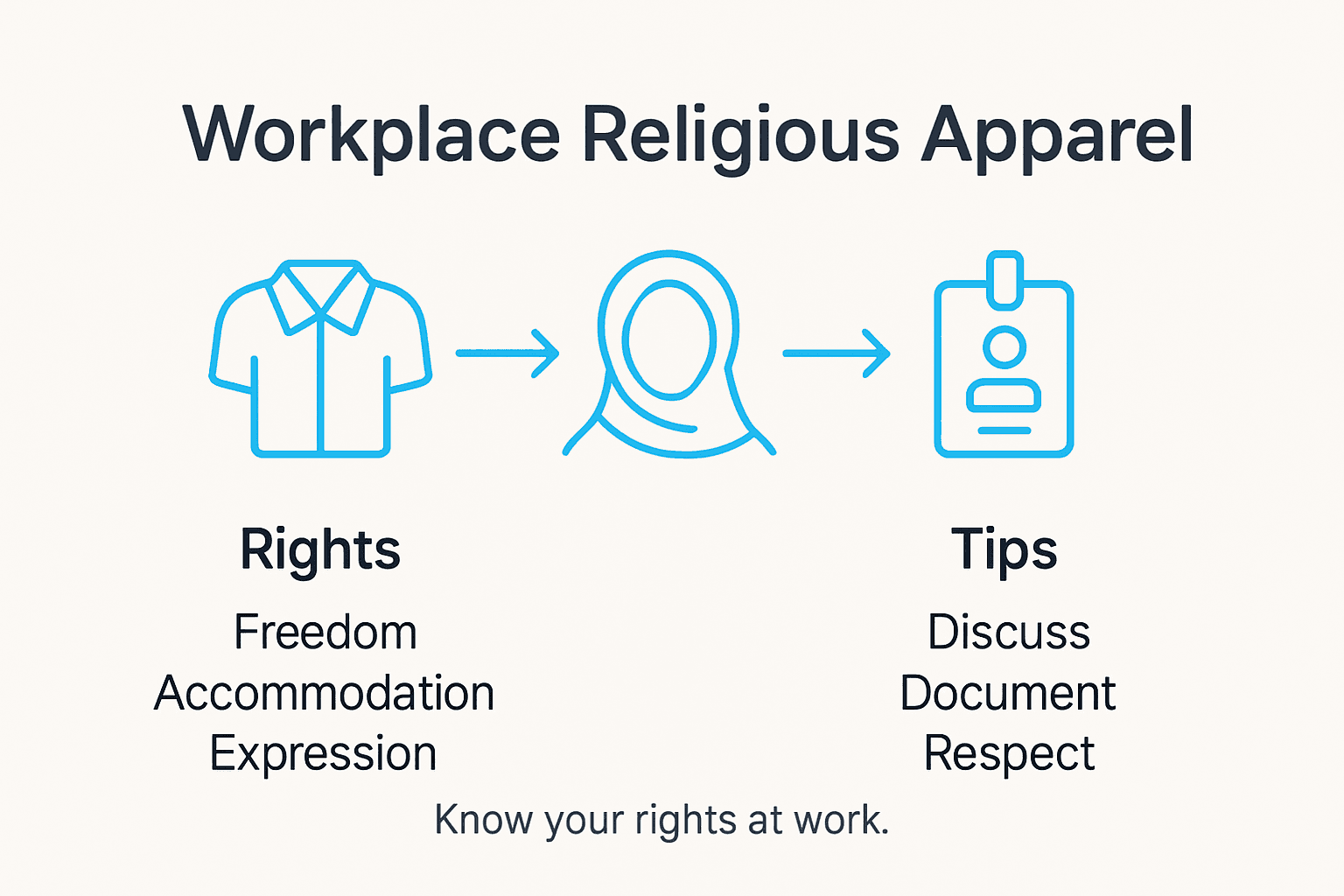
Workplace accommodations are crucial in this context. Title VII mandates that employers provide reasonable adjustments for religious dress, ensuring employees can wear hijabs, turbans, yarmulkes, or other religiously significant attire. This legal protection applies across public and private sectors, requiring employers to balance operational needs with employees’ religious freedoms.
Navigation of religious apparel requires open communication and mutual respect. Employees should proactively discuss their religious clothing needs with employers, while organizations must develop inclusive policies that recognize diverse spiritual expressions. Cultural competence involves understanding that religious attire is not just a clothing choice but a profound representation of personal identity, spiritual commitment, and cultural heritage.
Pro tip: When discussing religious attire accommodations with employers, prepare clear, concise documentation explaining the religious significance of your clothing and how it can be seamlessly integrated into workplace expectations.
What to Avoid When Choosing Religious Apparel
Religious apparel selection requires careful consideration to maintain the authentic spiritual and cultural significance of traditional garments, avoiding superficial interpretations that could potentially disrespect deeply held religious traditions. Thoughtful selection means understanding the nuanced symbolism and meaning behind each piece of religious clothing.
Certain critical pitfalls must be carefully navigated. Religious clothing choices should prioritize safety, cultural sensitivity, and respect for established religious customs, which means avoiding attire that might compromise professional environments or misrepresent spiritual practices. This includes steering clear of overly revealing designs, inappropriate accessories, or garments that could potentially interfere with workplace safety requirements.
Beyond practical considerations, religious apparel demands profound respect for its inherent spiritual meaning. Avoid commercialized designs that trivialize sacred symbols, mixing incompatible religious elements, or adopting clothing purely as a fashion statement without understanding its deeper significance. Each religious garment carries a rich cultural narrative that transcends mere aesthetic appeal, representing personal faith, community identity, and spiritual commitment.
Pro tip: Before selecting any religious apparel, consult trusted spiritual leaders or community members to ensure your clothing choice authentically reflects the intended religious and cultural significance.
Express Your Faith Boldly with Meaningful Apparel and Footwear
Finding authentic ways to display your Christian faith through clothing can be challenging. The article highlights how religious apparel serves as a vital expression of identity and devotion while navigating modern fashion trends and respecting deep spiritual symbolism. At Walk In His Footsteps, we understand the importance of honoring your beliefs without compromising style or comfort. Our patented cross bottom and Jesus fish bottom slip-on footwear are designed specifically for believers wanting to wear their faith visibly and proudly every day.
Discover how you can seamlessly blend spiritual commitment with practical Christian clothing solutions that resonate deeply with your personal journey. Don’t settle for ordinary when you can wear footwear that carries profound symbolism and meaning. Visit Walk In His Footsteps right now to find shoes created with your faith in mind. Step forward today with confidence, respect, and a powerful statement of belief.
Frequently Asked Questions
What is the purpose of religious apparel?
Religious apparel serves as a powerful form of spiritual expression and cultural identity, connecting individuals to their faith and traditions while symbolizing personal beliefs and commitment.
How does religious apparel vary across different faith traditions?
Religious apparel varies significantly among faith traditions, with each community embodying unique garments that convey deep cultural and theological meanings, such as the Christian cross necklace, Jewish kippah, or Muslim hijab.
What are some important considerations when selecting religious apparel?
When choosing religious apparel, it is essential to consider the spiritual significance of each piece, adhere to traditional customs, and avoid designs that may misrepresent or trivialize sacred symbols.
How can workplace accommodations support religious expression through apparel?
Workplace accommodations, mandated by laws like Title VII of the Civil Rights Act, require employers to reasonably accommodate employees’ religious attire, allowing individuals to express their faith while maintaining professional environments.
Recommended
- Christian Clothing Basics: Everything You Need to Know – Walk In His Footsteps
- Why Christian Fashion Matters: Complete Guide – Walk In His Footsteps
- Blending Fashion and Faith: Wear Belief with Purpose – Walk In His Footsteps
- Why Wear Christian Clothing: The Essential Guide – Walk In His Footsteps
- What Is Contemporary Menswear and Why It Matters – Vellure Homme