




Finding shoes that reflect both style and spiritual values can be challenging for American Christian women who want more than just trends. With over 83 percent of young Christian consumers seeking faith-based details in their fashion choices, the right footwear becomes a statement of both belief and confidence. This guide explores how faith-inspired apparel empowers women to express their American identity and spirituality without sacrificing personal style.
Table of Contents
- Defining Christian Apparel Markets And Misconceptions
- Popular Styles, Symbols, And Types Of Christian Footwear
- What Drives Christian Women’s Apparel Choices
- Role Of Sustainability, Quality, And Ethical Sourcing
- Pitfalls To Avoid In Faith-Based Fashion Brands
Key Takeaways
| Point | Details |
|---|---|
| Diverse Christian Apparel | The Christian apparel market includes various styles that reflect personal faith and modern fashion rather than being simply uniform or plain. |
| Ethical Consumption | Christian consumers prefer brands that demonstrate ethical sourcing and sustainability, aligning their purchases with spiritual values. |
| Sophisticated Consumer Preferences | Modern Christian consumers seek high-quality, stylish options that authentically represent their faith while meeting aesthetic standards. |
| Authenticity in Branding | Successful faith-based brands must ensure genuine representation of spiritual values to build trust and avoid alienating their audience. |
Defining Christian Apparel Markets and Misconceptions
Christian apparel markets represent a dynamic intersection of faith, personal expression, and fashion, challenging traditional perceptions about religious clothing. Consumer research on religious apparel shopping behavior reveals that Christian consumers are far more sophisticated and discerning than many stereotypes suggest. These markets are not simply about displaying religious symbols, but about creating meaningful connections between personal style and spiritual identity.
Contrary to common misconceptions, Christian apparel is not a monolithic category of plain, uniform clothing. Instead, it encompasses a wide range of styles that allow individuals to express their faith through contemporary, fashionable design. The market includes everything from subtle, elegantly designed pieces with Christian symbolism to bold statement clothing that directly communicates spiritual beliefs. Spiritual identity becomes a form of personal branding, where clothing serves as a conversation starter and a reflection of deeply held values.
The evolution of Christian apparel markets demonstrates a significant shift in how faith intersects with personal style. Modern Christian consumers are looking for clothing that is not just meaningful, but also high-quality, trendy, and versatile. Understanding Christian clothing stores reveals that these markets are driven by consumers who refuse to compromise between spiritual authenticity and fashion-forward design. They seek apparel that resonates with their beliefs while also allowing them to feel confident and contemporary.
Pro tip: When exploring Christian apparel, focus on pieces that genuinely reflect your personal spiritual journey and style, rather than simply following trends or purchasing items just because they display a religious symbol.
Popular Styles, Symbols, and Types of Christian Footwear
Christian footwear has evolved far beyond simple religious symbolism, emerging as a sophisticated fashion category that seamlessly blends spiritual expression with contemporary design. Christian footwear styles represent a nuanced approach to personal faith representation through carefully crafted shoe designs that speak to individual spiritual journeys.
The most popular Christian footwear styles typically incorporate meaningful symbolic elements that go far beyond surface-level decoration. These include intricate designs featuring crosses, fish symbols (ichthys), biblical scripture references, and subtle spiritual motifs. Some designs emphasize minimalist approaches with discreet embellishments, while others make bold statements with prominent religious iconography. Symbolic representation in Christian footwear serves multiple purposes: expressing personal faith, initiating spiritual conversations, and creating a sense of community among believers.

Specific types of Christian footwear range from casual slip-ons to more formal dress shoes, each offering unique ways to integrate spiritual messaging. Slip-on shoes with embedded cross or fish bottom designs provide a particularly innovative approach, allowing wearers to literally walk in a representation of their faith. Christian shoe styles for women and men demonstrate the remarkable diversity within this market, showcasing options that cater to different personal styles, professional contexts, and individual expressions of spirituality.
Here’s a quick overview of popular Christian footwear styles and their distinctive features:
| Footwear Style | Key Symbolic Elements | Typical Contexts |
|---|---|---|
| Slip-on Shoes | Cross or fish sole designs | Everyday casual |
| Dress Shoes | Subtle scripture embroidery | Formal & church events |
| Sneakers | Prominent cross graphics | Youth & active wear |
| Sandals | Minimalist fish motifs | Summer, outreach |
Pro tip: When selecting Christian footwear, prioritize designs that authentically reflect your personal spiritual journey and aesthetic preferences, rather than choosing pieces solely based on religious symbolism.
What Drives Christian Women’s Apparel Choices
Faith and fashion intersect in profound ways for Christian women, creating a complex landscape of personal expression, spiritual identity, and cultural navigation. Christian women’s apparel choices are driven by a multifaceted approach that balances personal style, religious values, and a desire for authentic self-representation. These choices go beyond simple clothing selection, representing a deliberate and thoughtful process of aligning external appearance with internal spiritual beliefs.
The primary motivators behind Christian women’s apparel selections are deeply rooted in concepts of modesty, spiritual authenticity, and personal comfort. Different denominational traditions interpret modesty uniquely, resulting in a diverse range of style preferences. Some women prioritize conservative, covering designs, while others seek contemporary styles that subtly communicate their faith. Understanding why Christian clothing matters reveals that these choices are not merely about appearance, but about creating a visual narrative of personal spiritual commitment.
Research demonstrates that Christian women are increasingly sophisticated consumers who refuse to compromise between style and spiritual integrity. They actively seek clothing that reflects their faith while maintaining professional and personal aesthetic standards. The market responds to this demand by offering increasingly nuanced apparel options that blend contemporary fashion trends with respectful, faith-aligned design principles. These choices are influenced by factors including denominational teachings, personal interpretations of biblical guidance, and a desire to represent their spiritual community authentically.
Pro tip: When selecting Christian apparel, consider how each piece reflects your personal spiritual journey and values, rather than conforming to external expectations or stereotypical religious dress codes.
Role of Sustainability, Quality, and Ethical Sourcing
Navigating ethical supply chains has become a critical consideration for Christian apparel brands committed to living out their faith through responsible business practices. Sustainability and ethical sourcing represent more than just a trend for faith-driven consumers; they embody a profound commitment to stewardship and social responsibility. Christian women increasingly seek apparel brands that demonstrate genuine commitment to environmental sustainability, fair labor practices, and transparent manufacturing processes.
The intersection of faith and ethical consumption reveals a powerful narrative of intentional purchasing. Quality becomes a fundamental consideration, reflecting the belief that clothing should be crafted with dignity, respect, and excellence. Christian consumers understand that their purchasing decisions have broader implications, extending beyond personal style to support manufacturing practices that align with biblical principles of justice, compassion, and human dignity. This approach transforms apparel shopping from a transactional experience into a meaningful act of cultural and spiritual witness.
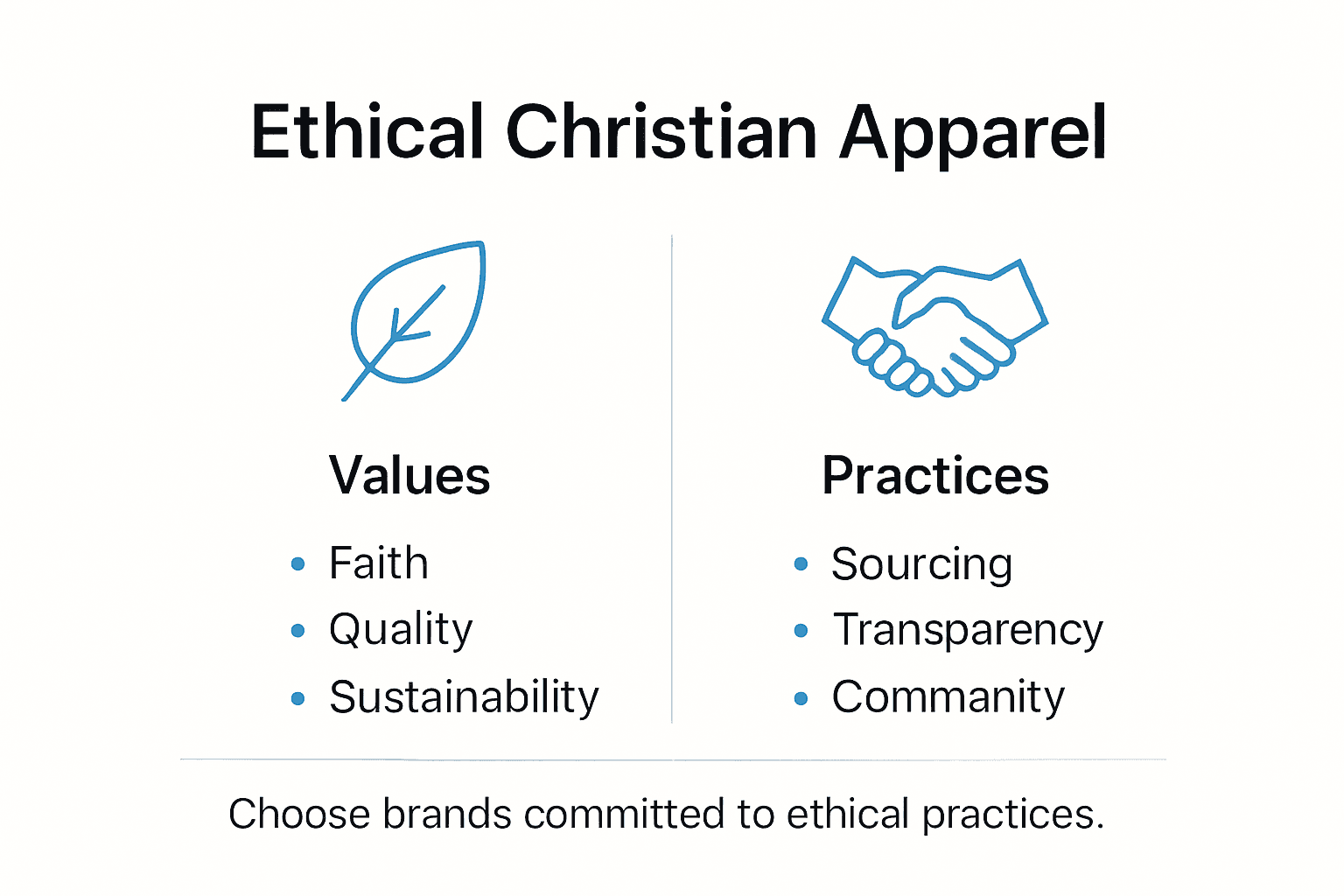
Brands that successfully integrate ethical sourcing demonstrate a holistic understanding of faith in practice. They prioritize collaborative relationships with manufacturers, ensuring fair wages, safe working conditions, and environmentally responsible production methods. These brands recognize that true quality transcends material durability, encompassing the entire human and ecological ecosystem involved in creating each garment. Christian apparel trends reflect a growing awareness that fashion can be a powerful medium for expressing spiritual values, with sustainability serving as a tangible expression of biblical stewardship.
Pro tip: Research brands thoroughly and prioritize those that transparently communicate their ethical sourcing practices, worker treatment, and environmental commitments.
The following table summarizes critical factors Christian consumers consider when evaluating apparel brands:
| Factor | Consumer Expectation | Business Impact |
|---|---|---|
| Authenticity | True faith representation | Builds lasting brand loyalty |
| Ethical Sourcing | Transparent supply chains | Enhances trust and reputation |
| Quality | Durable, respectful design | Increases repeat purchases |
| Cultural Sensitivity | Honors spiritual values | Avoids criticism, broadens appeal |
Pitfalls to Avoid in Faith-Based Fashion Brands
Understanding the complex landscape of religious consumer behavior reveals critical pitfalls that faith-based fashion brands must carefully navigate. Authenticity stands as the most fundamental requirement, with brands risking significant consumer trust if they misrepresent or superficially engage with spiritual values. Christian consumers are sophisticated and discerning, capable of detecting insincere attempts to capitalize on religious identity without genuine commitment.
One primary pitfall involves inappropriate or tokenistic use of religious symbolism. Brands that merely slap crosses or biblical quotes onto clothing without meaningful context alienate their core audience. The symbolic representation must be thoughtful, contextually appropriate, and reflective of deeper spiritual principles. This goes beyond visual design, requiring a holistic approach that demonstrates genuine understanding of the faith community’s values, cultural nuances, and spiritual sensitivities.
Financial and ethical considerations represent another critical area where faith-based brands can falter. Faith-based fashion guidelines emphasize that true spiritual integrity extends to manufacturing practices, supply chain transparency, and organizational values. Brands that compromise on ethical production, fair labor practices, or environmental stewardship fundamentally contradict the spiritual principles they claim to represent. Christian consumers increasingly demand transparency, viewing their purchasing decisions as an extension of their spiritual witness and commitment to social responsibility.
Pro tip: Conduct thorough community feedback and engage authentic faith leaders when developing faith-based apparel to ensure genuine representation and meaningful connection.
Discover Christian Apparel That Truly Reflects Your Spiritual Journey
Many face the challenge of finding Christian apparel that balances authentic faith expression with modern style and ethical values. This article highlights how spiritual identity and symbolic representation go hand in hand with high-quality, thoughtfully designed clothing and footwear. At Walk In His Footsteps, we understand these needs deeply. Our patented cross bottom and Jesus fish bottom slip-on footwear offer unique ways to wear your faith boldly and meaningfully without sacrificing comfort or contemporary style.
Step into your personal expression of faith today by exploring our exclusive Christian footwear collection designed to resonate with your spiritual journey. Join a community that values authenticity, ethical sourcing, and designs that start conversations. Visit Walk In His Footsteps and learn more about our Christian footwear styles for women and men and understanding Christian clothing stores. Your faith deserves apparel that speaks with conviction. Take the first step now.
Frequently Asked Questions
What defines Christian apparel markets?
Christian apparel markets are characterized by the intersection of faith and personal expression through fashion. They allow individuals to showcase their spiritual identity in diverse styles, ranging from subtle symbols to bold statements.
How can I choose the right pieces of Christian apparel for my style?
When selecting Christian apparel, focus on items that genuinely reflect your spiritual journey and personal style, rather than simply following trends or choosing based on visible religious symbols.
What types of footwear are popular in Christian markets?
Popular Christian footwear styles include slip-on shoes with cross designs, dress shoes with subtle embroidery, sneakers featuring religious graphics, and sandals with minimalist motifs, each catering to varied contexts and personal expressions.
How important is sustainability in Christian apparel?
Sustainability is crucial as many Christian consumers prioritize ethical sourcing and responsible manufacturing practices. It reflects a commitment to stewardship and ensures that purchases align with their spiritual and social values.
Recommended
- Why Wear Christian Clothing: The Essential Guide – Walk In His Footsteps
- Christian Identity and Clothing: Complete Guide USA – Walk In His Footsteps
- What Makes Apparel Christian: A Comprehensive Understanding – Walk In His Footsteps
- Understanding Christian Clothing Stores: Faith and Fashion – Walk In His Footsteps
- Role of Fashion in Eyewear: Complete Guide – ministry of sight